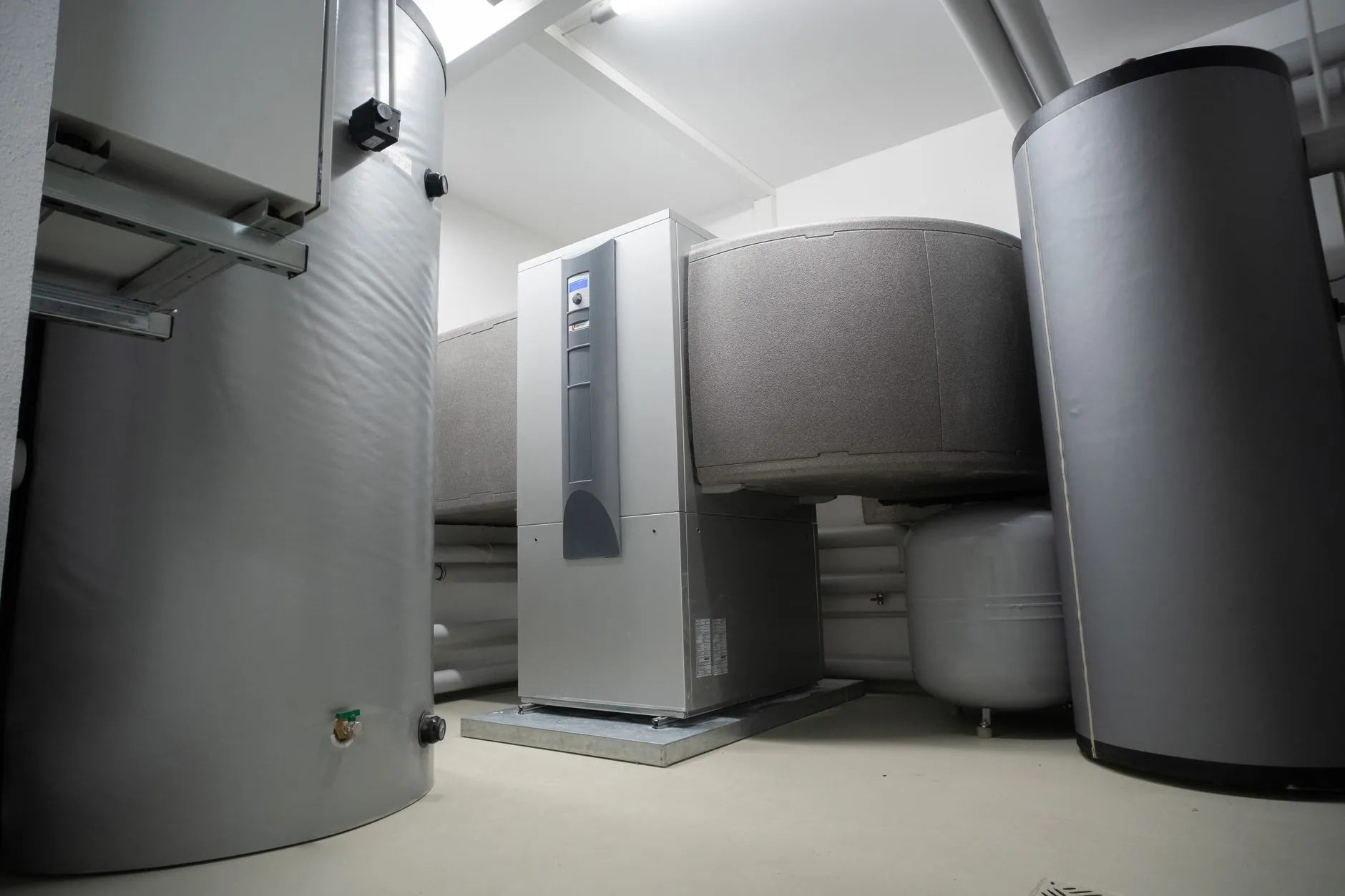
A CHP unit is bought for its heat as much as its power, so the decision starts with the site's heat load and ends with a contract that says who runs the plant. The tax position has moved: the government's CHP incentives page records that enhanced capital allowances ended with effect from 1 April 2020 for companies and 6 April 2020 for unincorporated businesses, and the reliefs that remain depend on certification under the CHP Quality Assurance (CHPQA) programme.
Which business sites suit a CHP system?
CHP, also known as cogeneration, generates heat and power in one process, and gov.uk describes the heat as going to an appropriately matched heat demand that would otherwise be met by a conventional boiler. So the first test is whether there is heat to use at night, at weekends and in summer as well as winter; where heat demand falls away for months, a unit runs fewer hours or wastes its heat. The guide to what CHP is explains the technology and the sites it fits. Where heat demand is seasonal, or the aim is to stop burning gas, the usual comparison is a commercial heat pump.
Gas, biogas or biomass: which fuel?
gov.uk describes a CHP plant as an electrical generator combined with equipment that recovers its heat, where the generator may be a gas turbine or a reciprocating engine, so ask which prime mover a quote offers. Natural gas is a fossil fuel: a gas-fired CHP engine cuts waste rather than carbon at source and should not be reported as renewable generation.
The renewable versions swap the fuel: biogas from anaerobic digestion, or wood in the plant covered by the biomass CHP guide. The fuel also changes the support: the CHPQA programme says the incentives available depend on the scheme, for example the type of input fuel, and Ofgem lists anaerobic digestion as a Smart Export Guarantee technology in its own right, with sustainability criteria and reporting requirements.
How is a CHP unit sized?
On the heat that will be used, not on the electricity demand. A year of half-hourly electricity data, with gas or heat meter data for the same period, shows the heat the site needs hour by hour; the energy monitoring guide covers what to log. A unit sized under the heat present in most hours runs longer, with the existing boilers covering the peaks, while one sized on the winter peak spends the summer throttled back, switched off or rejecting heat.
Does CHP pay on your site?
The test is the spark spread: the value of the electricity a unit generates, plus the boiler fuel its used heat replaces, set against the gas it burns, its maintenance and the cost of capital. Run it with your own bills, again when the energy contract renews, and with less heat use than the supplier expects. The spark spread guide works an example through; this page gives no savings or payback figures, because none would hold for every site.
CHPQA and the tax position
gov.uk says successful CHPQA certification can provide eligibility for exemption from the main rates of the Climate Change Levy and fuel-oil duty, exemption from the Carbon Price Support tax, and exemption from business rates for power generating plant and machinery, though not heat recovery plant; in Northern Ireland the rates exemption is restricted to micro-CHP. HMRC's notice on CHP schemes puts the levy point plainly: good quality CHP does not attract the main rates of CCL.
Certificates last one calendar year and expire at the end of December, and the Responsible Person, registered with the administrator as responsible for running the scheme, renews them through the CHPQA portal with the previous year's performance data. A quote should say who takes that role, who draws the scheme line diagram that marks the CHPQA boundary, and whether the meters for the fuel, power and heat figures are included. The CHPQA guide sets out the annual cycle.
A proposal that still counts an enhanced capital allowance is out of date. gov.uk says the Annual Investment Allowance can be claimed on most plant and machinery up to the AIA amount; the grants and funding page sets out the allowances that are open, and your tax adviser can confirm how they apply to a quote.
Which permits, planning and connection rules apply?
| Rule | When it applies to a CHP unit |
|---|---|
| Medium combustion plant, England and Wales | From 1 megawatt thermal (MWth) to under 50 MWth, any fuel; a generating unit may also fall under the specified generator rules, which reach smaller plant with a capacity agreement or a balancing service agreement. |
| Medium combustion plant, Scotland | SEPA says new plant from 1 MW to under 50 MW needs a permit under the Environmental Authorisations (Scotland) Regulations before it is put into operation. |
| Medium combustion plant, Northern Ireland | DAERA says all combustion plant between 1 and 50 MW (net rated thermal input) must obtain a permit or be registered. |
| Flue, England and Wales | Permitted development on a non-domestic building only if the system served is no more than 45 kilowatts thermal and the flue rises less than 1 metre above the roof (or no higher than one it replaces), with further limits on listed buildings, scheduled monuments and designated land. |
| Boiler house, Northern Ireland | Permitted development within limits, including a height of 3.6 metres excluding the flue and nothing within 75 metres of a neighbouring home's curtilage. |
Ask for the unit's rated thermal input, which decides the permit position: the specified generator guidance says it is calculated on net calorific value and that the manufacturer can give the figure. A larger unit, a new plant building or a flue outside the limits needs the planning authority's view before an order is placed.
For the gas work, HSE says a Gas Safe registered engineer must work on gas fittings in workplaces such as shops, restaurants, schools and hospitals, and a competent person in places such as factories and agricultural premises; for industrial and commercial plant, it also says the gas supply should be interlocked with the appliance's ventilation.
Running in parallel with the network brings in the operator's G99 process: National Grid Electricity Distribution applies it to generation rated above 16 A (3.68 kW) per phase, and SSEN must be told at least 15 days before generation above 50 kW is installed and commissioned. The Smart Export Guarantee covers micro-CHP only up to 50 kW in Great Britain, so price a larger gas unit on the power the site uses itself. If the heat is to be sold to other buildings, or to more than one property in a building, the scheme may be a heat network, which Ofgem regulates in Great Britain, as the heat network guide explains.
What should a CHP quote list?
Start with who will own and run the plant. NetRegs, the environmental guidance service for businesses in Scotland and Northern Ireland, describes three arrangements:
| Arrangement | Who owns and runs it | What NetRegs notes |
|---|---|---|
| Design and manage | The business pays for and owns the plant | Maximum control and the full benefit of the savings; maintenance costs sit on the balance sheet |
| Turnkey | A contractor designs, procures, installs and tests it, and the business owns it on completion | The business runs and maintains it, or outsources that to a contractor |
| Energy service company (ESCO) | The ESCO installs, owns, operates and maintains it | A reduced level of savings, and the plant does not appear separately on the balance sheet |
Then ask every CHP supplier for the same lines, so two quotes for supply and installation can be compared:
- The hourly heat and power profile behind the size, and the data it came from.
- The running hours assumed, and what happens to unused heat in summer.
- Datasheet figures: electrical and heat output and efficiency at full and part load, and the rated thermal input.
- Who registers the scheme for CHPQA, acts as Responsible Person and completes the yearly self-assessment, and which meters are supplied.
- Who makes the network application, carries out the commissioning tests and applies for any permit.
- Who does the gas work, under which registration, and how the plant room is ventilated and interlocked.
- The service interval in running hours, what the maintenance price covers, and the boiler back-up while the unit is stopped.
The micro CHP guide covers the smaller units that hotels, care homes and leisure sites look at. Once the heat data is to hand, you can describe the site through the quote request form.
Sources
All checked 24 November 2026; the official page is the authority if it differs from this one.
- DESNZ: Combined Heat and Power Incentives (1 April 2019), CHPQA Programme (2 September 2025), Combined heat and power (6 October 2020).
- HMRC: Excise Notice CCL1/2 (13 November 2023); GOV.UK: Annual investment allowance.
- Environment Agency and Natural Resources Wales: Medium combustion plant and specified generators (22 July 2024), Specified generator: when you need a permit (1 September 2022); medium combustion plant guidance from SEPA and DAERA.
- legislation.gov.uk: permitted development orders for England (Part 14), Wales (Schedule 2) and Northern Ireland (Part 37).
- HSE: Gas safety for employers; NGED: G99 connection procedures; SSEN: Generation connection at or above 50kW.
- Ofgem: Smart Export Guarantee: generators and Heat networks; NetRegs: Combined Heat and Power maintenance.
Request a CHP quote
Combined Heat and Power: common questions
Can enhanced capital allowances still be claimed on a new CHP unit?
No. The government's CHP incentives page records that the enhanced capital allowance schemes ended with effect from 1 April 2020 for companies and 6 April 2020 for unincorporated businesses. Ordinary capital allowances, such as the Annual Investment Allowance, are a separate question for your tax adviser.
Who keeps the CHPQA certificate in force once the unit is running?
The Responsible Person, whom gov.uk describes as the person registered with the administrator as responsible for the operation of the scheme. Certificates last one calendar year and expire at the end of December, so the self-assessment through the CHPQA portal is a yearly task. Agree in the contract whether the supplier or the site prepares it.
Can a CHP unit be paid for the electricity it exports?
Only a small one under the Smart Export Guarantee: Ofgem caps micro-CHP at 50 kW, for installations in Great Britain. Anaerobic digestion is listed as a separate SEG technology, up to 5 MW. For a larger gas unit, ask an electricity supplier what it would offer for exported power before counting on any income from it.
Does a CHP flue need planning permission?
In England and Wales a flue for a CHP system on a non-domestic building can be permitted development when the system it serves is no more than 45 kilowatts thermal and the flue keeps within height limits, with further limits on listed buildings, scheduled monuments and designated land. A larger unit or a new plant building should be raised with the planning authority before an order is placed. In Northern Ireland the permitted development order covers a small boiler house for a CHP system, within size and distance limits.
Renewable energy guides by city
Local guides to renewable energy for businesses in each city:
London · Birmingham · Leeds · Sheffield · Manchester · Bradford · Liverpool · Bristol · Coventry · Cardiff · Leicester · Nottingham · Doncaster · Newcastle upon Tyne · Milton Keynes · Sunderland · Southampton · Hull · Wolverhampton · Plymouth · Derby · Stoke-on-Trent · Northampton · Swindon · Luton · Portsmouth · Reading · Oxford · Cambridge · Norwich · Castleford · South Wales · Stokesley · Northamptonshire · Wellingborough · Yorkshire and the Humber · East Midlands · East of England · North East · North West · Northern Ireland · Scotland · South East · South West · West Midlands