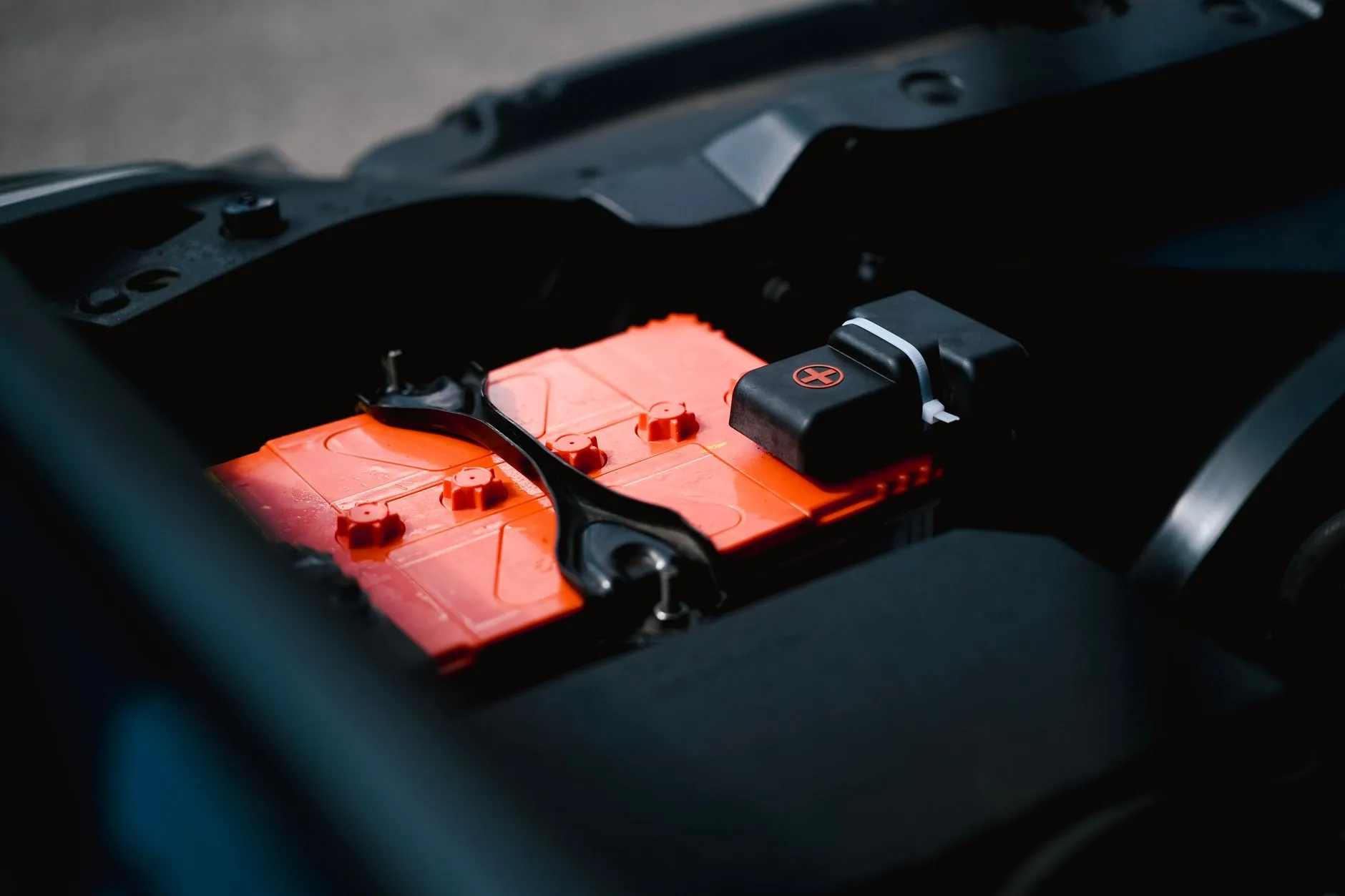
Typical battery storage project
- Typical scale
- 30 kWh - 1 MWh
- Project value
- £20,000 - £500,000
- Typical payback
- 7 years
- Annual CO₂ saved
- 5-120 tonnes
What commercial battery storage is and why it matters
Commercial battery storage is a large rechargeable battery that sits alongside your electricity supply and stores energy when it is cheap or self-generated, then releases it when power is expensive or when generation stops. For a business, that solves a timing problem: solar panels produce most of their power in the middle of the day, but many sites use a lot of their electricity in the evening, at weekends or overnight. Battery storage for business closes that gap. It banks the surplus your solar array would otherwise export for a few pence and gives it back when you would otherwise be buying from the grid at 25 to 45p per kWh.
That single shift is why storage matters. On its own, a well-designed commercial solar array typically covers 55 to 75% of a site’s consumption directly. Add a battery and self-consumption rises to 80 to 95%, because far less generation is spilled to the grid and far more of your demand is met from power you have already paid for. Commercial energy storage also does three other jobs that a solar array alone cannot: it shifts grid import to cheap overnight tariffs, it shaves the expensive peak demand and capacity charges that punish sites with sharp load spikes, and it can hold a reserve to keep critical equipment running through a power cut.
None of that means every business needs a battery, and we will say so plainly where it does not stack up. But for a site with on-site generation and a genuine evening, weekend or overnight load, commercial battery storage is often the measure that turns a good solar business case into a very strong one.
How commercial battery storage works
A modern commercial battery system is a set of lithium-based battery modules, an inverter that converts between the battery’s direct current and your site’s alternating current, and a controller that decides when to charge and discharge. That controller is where the value is created. It watches your generation, your consumption and your electricity tariff, and it makes a decision every few seconds about whether to store energy, hold it, or release it.
In practice it works in a few overlapping ways:
Storing surplus solar
When your panels generate more than the site is using, the battery charges instead of exporting the surplus to the grid. Later, when the sun drops but the building is still occupied, that stored energy is discharged to cover the load. This is what lifts self-consumption from the 55 to 75% a solar array reaches on its own to 80 to 95% with storage.
Time-shifting cheap grid power
Even without solar, a battery can charge overnight on a cheap off-peak tariff and discharge during the working day, so you buy expensive daytime power far less often. This arbitrage between overnight and daytime rates is a real saving in its own right, and it is why some sites install storage before, or without, generation.
Shaving peak demand and capacity charges
Commercial electricity bills are not just about the units you use. Distribution (DUoS) and capacity charges are driven by your demand at the worst moments. A battery that discharges to flatten those short, sharp peaks can cut those charges noticeably, particularly for sites with spiky loads such as manufacturing start-ups or refrigeration cycles.
Resilience and grid revenue
Where an outage is costly, for example a data operation, a cold store or a production line, a battery can be configured to provide uninterruptible backup for critical circuits. And with the right size and connection, a battery can earn revenue by providing flexibility to grid balancing services, effectively being paid to help keep the network stable.
Sizing and economics
The single most important rule with commercial battery storage is that the battery is sized from your load shape, not from your roof or a round number. We model the half-hourly profile of what you generate and what you consume across a full year, then size the battery to the evening and overnight load it can realistically displace. Oversize it and you pay for capacity that never cycles; undersize it and you leave savings on the table.
Because that sizing depends on real data, most PV systems we design are built battery-ready from the start, so storage can be added cleanly once there is around a year of generation and consumption data to work from. That sequence, solar first and storage once the data is in, is deliberate: it means the battery is sized to what your site actually does, not to a forecast.
The numbers, in the ranges we see across UK commercial sites:
- Capacity: typically 30 kWh for a small commercial site up to 1 MWh for a large factory or distribution centre.
- Project value: £20,000 to £500,000, scaling with capacity and the complexity of the connection and installation.
- Payback: usually 5-9 years, depending on how hard the battery is worked. A battery that both time-shifts power and shaves peak charges pays back faster than one used for a single purpose.
- Carbon: a representative commercial battery displaces roughly 5 to 120 tonnes of CO2 a year, mostly by pushing self-generated and off-peak power in place of grid electricity at peak carbon intensity.
To put that together, a modelled distribution site with a 220 kW rooftop solar array and a 215 kWh battery might lift self-consumption to over 80%, with the battery covering the early-shift ramp before the panels wake up. The battery earns its return not from one saving but from several stacked together: more solar used on site, cheaper overnight import, lower peak charges and, where it applies, balancing revenue. We show you each of those layers in the model so you can see exactly where the payback comes from. For the full picture across the whole renewable stack, our cost breakdown sets out the numbers side by side.
Funding and grants for battery storage
Battery storage does not have a dedicated capital grant in the way EV charging does, but the economics are still helped by tax relief and by the wider system it supports.
The main lever is capital allowances. Commercial battery storage qualifies as plant and machinery, so under 100% Annual Investment Allowance a profitable company can deduct the full cost of the battery from its taxable profit in year one, recovering roughly a quarter of the outlay through tax. VAT is separately reclaimable for VAT-registered businesses.
A word on VAT itself: standalone commercial battery storage carries the standard 20% VAT rate. The zero-rate and reduced-rate reliefs you may have read about are for domestic installations only, and they do not apply to non-domestic buildings. We flag this because it catches businesses out who have seen the domestic headlines.
Where a battery is installed as part of a larger solar or decarbonisation project, that wider scheme can open other doors. Public bodies use the Public Sector Decarbonisation Scheme (closed: no application window since Phase 4 ended in November 2024), and combined authorities periodically run regional SME decarbonisation grants. Our grants and funding guide covers which routes apply to your situation, and we check the current open windows before recommending a route.
Compliance and grid connection
Grid-connected commercial storage is a formal connection to the distribution network, so it follows the same rules as generation. That means a G99 application to your Distribution Network Operator (DNO) for most commercial systems, with G100 export or import limiting used where it lets us secure a connection quickly and avoid expensive network reinforcement. G100 limiting caps what the system can push to or pull from the grid, which often means a battery can be connected without waiting months for a network upgrade. Connection timescales run from a few weeks for small systems to several months for large ones, so applications go in early.
The other major consideration is fire safety and siting. A battery energy storage system (BESS) stores a lot of energy in a small space, and it must be located and built to manage that safely. We follow National Fire Chiefs Council and British Standard guidance on siting, which covers adequate separation from buildings and boundaries, ventilation, and access for the fire service. Larger systems may also need planning permission, and the siting design is agreed early because it affects where the battery can go on your site.
Done properly, none of this is a barrier; it is routine. But it is exactly the kind of detail a single-product box-shifter skips and a proper specialist handles from the start. We manage the G99 process, the fire-safety siting and any planning as part of the design, not as an afterthought.
When commercial battery storage does, and does not, suit a business
We are technology-neutral, so here is the honest version.
A battery makes strong sense when:
- You already have, or are installing, on-site solar that exports a meaningful surplus.
- Your load continues into the evening, overnight or across the weekend, so there is stored energy to use.
- You are on a tariff with a genuine gap between peak and off-peak rates, giving arbitrage value.
- You face high peak demand or capacity charges that a battery can shave.
- An outage would be genuinely costly, so backup resilience has real value.
A battery is harder to justify when:
- Your consumption almost perfectly matches your solar generation through the day, so there is little surplus to store and little evening load to serve. In that case the solar array is already doing the work and a battery adds cost without much return.
- You have no on-site generation and a flat tariff with little peak-to-off-peak difference, which removes both the storage and the arbitrage case.
- The site is likely to change use or be vacated before the battery pays back.
In those situations we will tell you to hold off, or to spend the capital on efficiency or generation that pays better first. Storage is a powerful tool, but it is the third step in a sensible sequence, not the first. The order that maximises return is to cut waste, then generate, then store and shift, then electrify heat and transport. Putting a battery in before you have that base right is a common and expensive mistake.
How battery storage fits the wider renewable stack
Commercial battery storage is rarely a standalone purchase. It is the piece that makes the rest of an on-site energy system work harder, and it is designed as part of that system rather than bolted on afterwards.
It pairs most naturally with commercial solar PV: the panels generate, the battery stores the surplus, and the two together push self-consumption to the top of the range. It works hand in glove with EV charging, letting a fleet or staff car park charge on stored solar at a few pence per kWh instead of grid power at peak rates, while load management avoids a costly supply upgrade. It supports commercial heat pumps by storing cheap or self-generated electricity to run them, improving the economics of electrified heat. And it sits under energy management, because the controller’s decisions are only as good as the monitoring and demand data feeding them.
Where a business wants generation without the capital outlay, storage can also form part of a PPA or procurement structure, and on land-rich sites it complements wind or CHP generation that runs at different times to solar. Designed as one integrated system, these technologies reinforce each other; installed as separate silos, they fight for the same grid connection and leave value on the table.
For a deeper technical treatment of storage specifically, our sister specialists at battery storage for business go into further detail on system design, chemistry and revenue stacking.
How we work
We start with your data, not a product. We pull your half-hourly meter readings, look at your generation if you already have solar, and model where a battery would actually earn its keep across a full year. If storage stacks up, you get a costed proposal that shows the size, the price, the payback and each layer of saving the battery delivers, from self-consumption to peak-shaving to any balancing revenue. If it does not stack up yet, we say so and tell you what to do first. Every system is MCS-standard, connected properly through G99, and sited to current fire-safety guidance. To see whether commercial battery storage suits your site, request a free assessment and quote and we will model the numbers from your own consumption data.
Get a free battery storage assessment
Battery Storage: common questions
How much does commercial battery storage cost?
A commercial battery storage system typically costs £20,000 to £500,000, depending on capacity. Systems range from around 30 kWh for a small site up to 1 MWh for a factory or large distribution centre. The battery is sized to the evening and overnight load it displaces, not a nameplate figure, so the price follows your load shape rather than your building size. Payback usually runs 5-9 years.
Should I add a battery at the same time as solar?
Usually not straight away. Most commercial PV systems are designed battery-ready, so you can add storage once you have around a year of real generation and consumption data. That data shows exactly how much surplus you export and when your expensive peaks fall, which lets us size the battery precisely rather than guess. Fitting the wrong size on day one wastes capital, so we normally recommend solar first, then storage.
Does a battery need grid connection approval?
Yes. Grid-connected commercial storage needs a G99 application to your Distribution Network Operator, with G100 export or import limiting used where it speeds up the connection or avoids costly network reinforcement. Larger systems may also need planning permission and must follow BESS fire-safety siting guidance. We handle the G99 process and design the installation to the current NFCC and British Standard guidance from the outset.
Can commercial battery storage earn revenue?
Yes, on the right site. Beyond saving money by storing cheap or self-generated power and shaving peak demand charges, a battery can earn income from grid balancing services that pay for flexibility. It also provides UPS resilience where an outage would be costly. Whether balancing revenue stacks up depends on your battery size, tariff and connection, so we model it honestly rather than assuming it applies to every site.