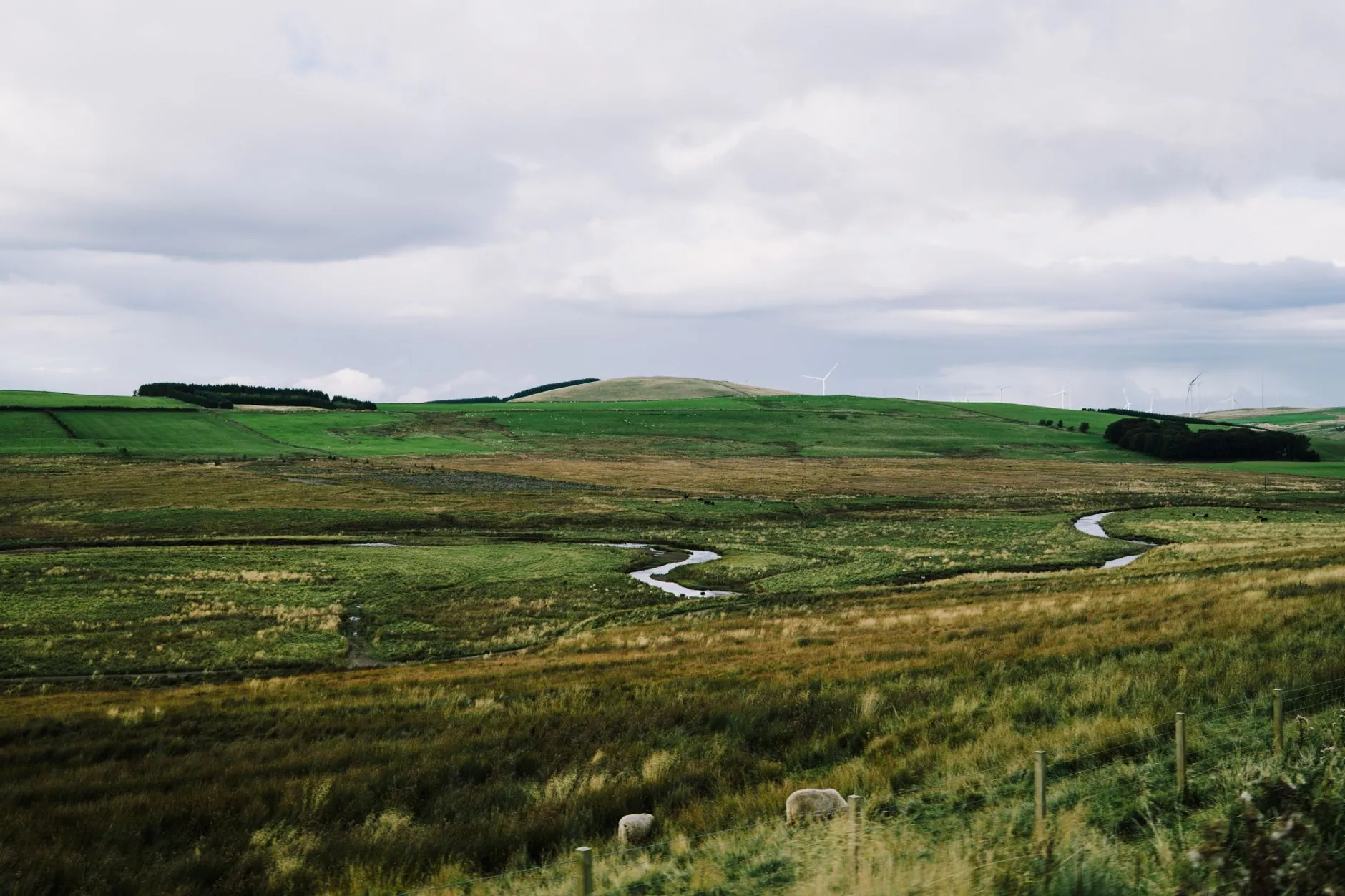
Typical on-site generation: wind & CHP project
- Typical scale
- 5 kW - 500 kW
- Project value
- £40,000 - £1m+
- Typical payback
- 9 years
- Annual generation
- 15,000 - 1,500,000 kWh
- Annual CO₂ saved
- 8-400 tonnes
Commercial wind turbines and CHP: on-site generation for the right business
Commercial wind turbines generate clean electricity around the clock on exposed rural and coastal sites with land, and combined heat and power (CHP) generates electricity and useful heat together for sites with a constant, simultaneous demand for both. These are the specialist end of on-site generation. They can be excellent on the right site and a waste of capital on the wrong one, which is why our first job is an honest assessment of whether commercial wind power or CHP actually suits your business, or whether your money is better spent on commercial solar and battery storage first.
We are technology-neutral. We do not sell wind turbines or CHP units by default, and we will tell you plainly when the wind speed, land, grid capacity or heat demand does not support them. For a large majority of UK businesses, that is the honest answer. But for a genuinely exposed site with spare land, or a building running a high and steady heat load day and night, on-site wind and CHP round out the renewable stack in ways solar alone cannot.
Why on-site generation beyond solar matters
Most businesses can meet a large share of their electricity demand with a well-sized solar array. Solar has one structural limitation: it generates in daylight and produces least in winter, exactly when many sites use most. Wind fills that gap. A turbine on an exposed site generates through the night and produces its strongest output in the windy winter months, so a combined solar and wind site delivers more evenly across the year and lifts total self-generation.
CHP addresses a different gap. Solar and wind produce electricity but do nothing for heat. A site burning a lot of gas for a constant process or building load carries Scope 1 carbon that on-site solar cannot touch. CHP, or on the right sites a heat pump, is the route to cutting that heat-related carbon while also generating power.
How commercial wind turbines and CHP work
Small and medium commercial wind
Commercial wind turbines in the range we work with span roughly 5kW to 500kW. A single mid-size turbine on a good site can generate anywhere from 15,000 to 1,500,000 kWh a year depending on rating and wind resource. The turbine converts the kinetic energy of moving air into electricity, which is used on site first and exported when generation exceeds demand.
The single most important variable is average wind speed. Output rises with the cube of wind speed, so a site averaging 6 metres per second produces far more than one averaging 4.5, and a poor site never pays back regardless of turbine quality. Turbines suit open, exposed rural and coastal land with clear fetch and no upwind obstructions such as trees, buildings or hills. Suburban and urban sites are almost never viable: turbulence and low average speeds gut the output. This is why honest siting is everything with wind, and why we assess it before anything else.
Combined heat and power (CHP)
CHP, sometimes called cogeneration, generates electricity on site, typically from a gas or biogas engine, and captures the heat that a conventional generator would waste. That recovered heat serves space heating, hot water or a process load. Because it uses the fuel twice, a CHP unit reaches around 80 to 90 per cent total efficiency, against roughly 50 per cent for grid electricity plus a separate boiler.
The economics of CHP live and die on running hours. A unit only earns its return when it runs for long periods meeting a genuine, simultaneous demand for both heat and power. That points to a specific set of buildings: leisure centres with pools, hospitals, hotels, care homes, and process industry with a steady thermal load. On a site with seasonal or intermittent heat demand, the unit sits idle and the numbers collapse.
Biomass and biogas
For agricultural and estate sites with a genuine fuel source, biomass boilers and biogas from anaerobic digestion (AD) round out on-site generation. Biomass suits sites with a reliable supply of wood fuel and a steady heat load; biogas from AD suits farms and food processors with organic feedstock that can be digested to produce gas for heat, power or a CHP unit. These are specialist projects with real fuel-logistics and maintenance commitments, and we only recommend them where the feedstock and demand genuinely support them.
Sizing and economics: the real numbers
Commercial wind and CHP projects in our scope typically fall between £40,000 and over £1m, depending on turbine rating, CHP capacity, groundworks and grid connection. Annual generation ranges from around 15,000 kWh for a small turbine to 1,500,000 kWh for a large one or a well-loaded CHP unit, saving in the region of 8 to 400 tonnes of CO2 a year against grid and gas.
Payback is longer and less certain than solar. A typical wind or CHP project runs to roughly 9 years and sometimes longer, against 5 to 8 years for commercial solar. That gap is the honest core of the decision. Wind carries higher planning risk, more moving parts and more maintenance; CHP depends on running hours and the spark spread between gas and electricity prices, which moves. We never model these on a nameplate figure. We use a proper wind-speed assessment for turbines and your half-hourly electricity and gas data for CHP, so the payback we quote is one you can take to the board and defend.
A representative example: a modelled exposed rural site with an average wind speed above 6 metres per second, spare land and a grid connection with headroom, installing a mid-size turbine to complement an existing solar array, generating clean power overnight and through winter and improving the site’s year-round self-generation. That is the profile where wind stacks up. Change any one of those variables and the case usually falls back to solar and battery.
Funding and grants for wind and CHP
There is no single dedicated grant for commercial wind turbines in most of the UK, so the funding case rests on tax relief and the right scheme where one applies. The main levers are:
- 100% Annual Investment Allowance. Wind turbines and CHP plant qualify as plant and machinery, so a profitable company can deduct the full capital cost from taxable profit, recovering roughly a quarter of the outlay through tax.
- Smart Export Guarantee (SEG). MCS-certified generation up to 5 MW can be paid for surplus power it exports to the grid, which matters for a turbine generating overnight when on-site demand is low.
- Climate Change Levy relief for CHP. A CHP unit that is CHPQA-certified as good-quality can access Climate Change Levy relief and enhanced allowances, which materially improves the running economics. Certification is not automatic, so we design and commission with CHPQA in mind.
- Industrial Energy Transformation Fund (IETF). The Industrial Energy Transformation Fund, which supported larger heat, process and generation projects including CHP, closed to new applications in July 2025 with no successor planned, so these projects now rest on capital allowances and PPA funding.
- Public Sector Decarbonisation Scheme (PSDS) (closed: no application window since Phase 4 ended in November 2024) and Salix. Public bodies, hospitals and leisure trusts fund heat and generation measures through PSDS, applied for centrally by the organisation.
Full detail on how these stack sits on our grants and funding page, and we model the net cost after relief on every proposal. Note that the Boiler Upgrade Scheme covers heat pumps and, in limited rural cases, small biomass boilers, capped at 45 kW - it is never part of a wind, CHP or commercial-scale funding case.
Compliance and grid connection
On-site wind and CHP carry more regulatory weight than rooftop solar, and this is a large part of why they suit fewer sites.
Planning permission
Commercial wind turbines almost always need full planning permission. Expect a wind-speed assessment, a noise assessment, a shadow-flicker study, and for larger turbines often a full Environmental Impact Assessment (EIA). The process is longer, costlier and less certain than the Permitted Development route most rooftop solar enjoys, and local objection is a real risk. We scope planning viability early so you are not funding an application that was never likely to succeed. CHP plant may need planning for external plant, flue and acoustic housing, and biomass and AD carry their own permitting.
Certification and standards
Small commercial wind up to 50kW should be MCS-certified, which is also the gateway to the Smart Export Guarantee. CHP should be CHPQA-certified as good-quality to unlock Climate Change Levy relief and enhanced capital allowances. Refrigerant and emissions rules apply to the relevant plant, and all work is delivered to the applicable commercial design standards.
Grid connection
All but the very smallest units need a full G99 application to your Distribution Network Operator before they can connect and export. Larger connections can need G100 export limiting to secure a connection quickly and avoid costly network reinforcement. G99 timescales run from a few weeks for small systems to several months for large ones, so the application goes in early. A grid connection with genuine headroom is one of the four things a viable wind or CHP site needs, alongside wind or heat demand, land or space, and planning.
When wind and CHP suit a business, and when they do not
We would rather lose a wind sale than build a turbine that never pays back, so this section is deliberately blunt.
Commercial wind power suits your business when: you have a genuinely exposed rural or coastal site with average wind speed above roughly 5 to 6 metres per second; you own or control spare land with clear fetch and no close neighbours; your grid connection has export headroom or can be upgraded economically; and you can carry the planning process. On that profile, wind complements solar beautifully and lifts year-round self-generation.
Commercial wind power does NOT suit your business when: you are on a suburban, urban or sheltered site; your average wind speed is below about 5 metres per second; you have no spare land; or your grid or planning position is weak. That describes most UK businesses, and for them commercial solar plus battery storage delivers a faster, more certain payback with none of the planning risk. We will say so.
CHP suits your business when: you have a high, constant, simultaneous demand for both heat and power, day and night, all year, such as a leisure centre with a pool, a hospital, a hotel or a continuous process line, and the price gap between gas and electricity supports the running economics.
CHP does NOT suit your business when: your heat demand is seasonal, intermittent or modest, or you are already electrifying heat. In those cases a heat pump is usually the better route to cutting heat carbon, and solar handles the electricity. Assessing this honestly, rather than defaulting to whatever we happen to install, is the whole point of an independent specialist.
How wind and CHP fit the wider renewable stack
On-site wind and CHP are rarely a first move. They sit at the specialist end of a sequenced roadmap that, for most businesses, starts with cutting waste through energy management, then generating with commercial solar, then storing and shifting with battery storage, then electrifying heat and transport with heat pumps and EV charging. Wind earns its place on the right site by filling solar’s winter and overnight gap; CHP earns its place by covering heat and power together where a heat pump does not fit the load.
Where capital is the barrier, a power purchase agreement can fund on-site generation at zero upfront cost, or contract clean power from an off-site wind or solar farm at a fixed long-term price. That is often the more realistic route to wind for a business that wants the carbon benefit without owning and maintaining a turbine. We model owned kit against a PPA and against asset finance so you can compare the true cost of capital, and we design the whole stack as one integrated system rather than a set of separate installs.
How we work
We start with a free, no-obligation assessment. For wind, that means a proper look at your site’s exposure, land and likely wind resource, and an early read on planning and grid viability before you spend anything on a full assessment. For CHP, it means analysing your half-hourly electricity and gas data to confirm the heat and power loads genuinely overlap for enough hours to pay back. If the numbers do not stack up, we tell you, and we point you at the measures that do. If they do, you get a costed proposal with the generation, savings, payback and CO2 modelled from real data, plus the planning, MCS or CHPQA and G99 route mapped out. To get an honest read on whether commercial wind turbines or CHP suit your site, request a quote or see our cost guide and FAQs for the wider picture.
Get a free on-site generation: wind & CHP assessment
On-site Generation: Wind & CHP: common questions
Are commercial wind turbines worth it for a UK business?
Only on the right site. You need a genuinely exposed rural or coastal location with an average wind speed above roughly 5 to 6 metres per second, spare land, a grid connection with headroom, and no close neighbours. Where those line up, a 5kW to 500kW turbine can generate around the clock and pay back in roughly 9 to 15 years. For most urban and suburban sites the wind is too poor and solar wins easily, so we assess honestly before recommending it.
What is combined heat and power (CHP) and which businesses suit it?
CHP generates electricity on site and captures the waste heat for space heating, hot water or process use, reaching 80 to 90 per cent total efficiency versus around 50 per cent for grid power plus a boiler. It suits sites with a high, constant, simultaneous demand for both heat and power, such as leisure centres, hospitals, hotels and process industry. Where heat demand is seasonal or low, CHP does not stack up and a heat pump is usually better.
Do commercial wind turbines need planning permission?
Almost always, yes. Unlike rooftop solar, commercial wind turbines nearly always need full planning permission with a wind-speed assessment, noise and shadow-flicker studies, and often an Environmental Impact Assessment. The process is longer and less certain than for solar, which is one reason wind suits a minority of sites. We scope planning risk early so you know the likely cost and timescale before committing to a full application.
How does on-site wind or CHP fit with solar and battery?
They complement each other. Wind generates most in winter and overnight when solar is weakest, so a combined solar and wind site produces more evenly across the year. CHP covers heat and power together for high-heat sites. A battery stores surplus from any of them and shifts it to peak periods. We size the whole stack from your half-hourly meter and heat data so each technology earns its return rather than overlapping.